


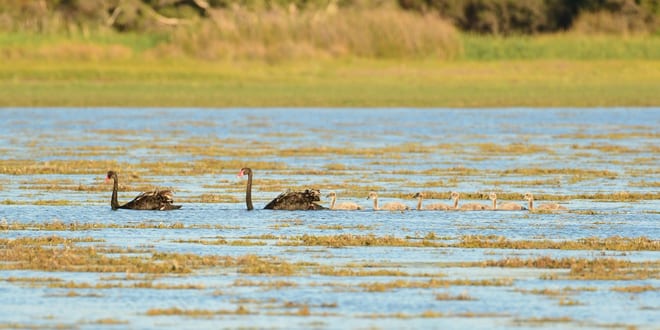
Western Australian Seabird Rescue (WASR) are working with the Department of Biodiversity, Conservation and Attractions (DBCA) to save several black swan cygnets from a lake that is drying up south of Mandurah.
Lake McLarty has only 14cms of water remaining and with warm temperatures forecast over the coming week, the water level is expected to drop rapidly.
"Most adult swans have already left due to declining water levels, reduced food availability, and increasing predation risk from foxes, with only parents still caring for young birds remaining," Western Australian Seabird Rescue said.
WASR said there is a risk the remaining cygnets will be abandoned before they are capable of surviving on their own and they need to be rescued as soon as possible.
Some have already reportedly died after being attacked by foxes.
A DBCA spokesperson said they are working with WA Seabird Rescue to coordinate volunteers accessing the reserve to monitor and rescue the cygnets.
DBCA staff visited the lake on Tuesday, November 10 where they observed about 50-60 swans including adults and cygnets.
They estimated it would take about five to seven days for the lake to dry out and have scheduled a contractor to undertake fox control in the reserve in the coming days.
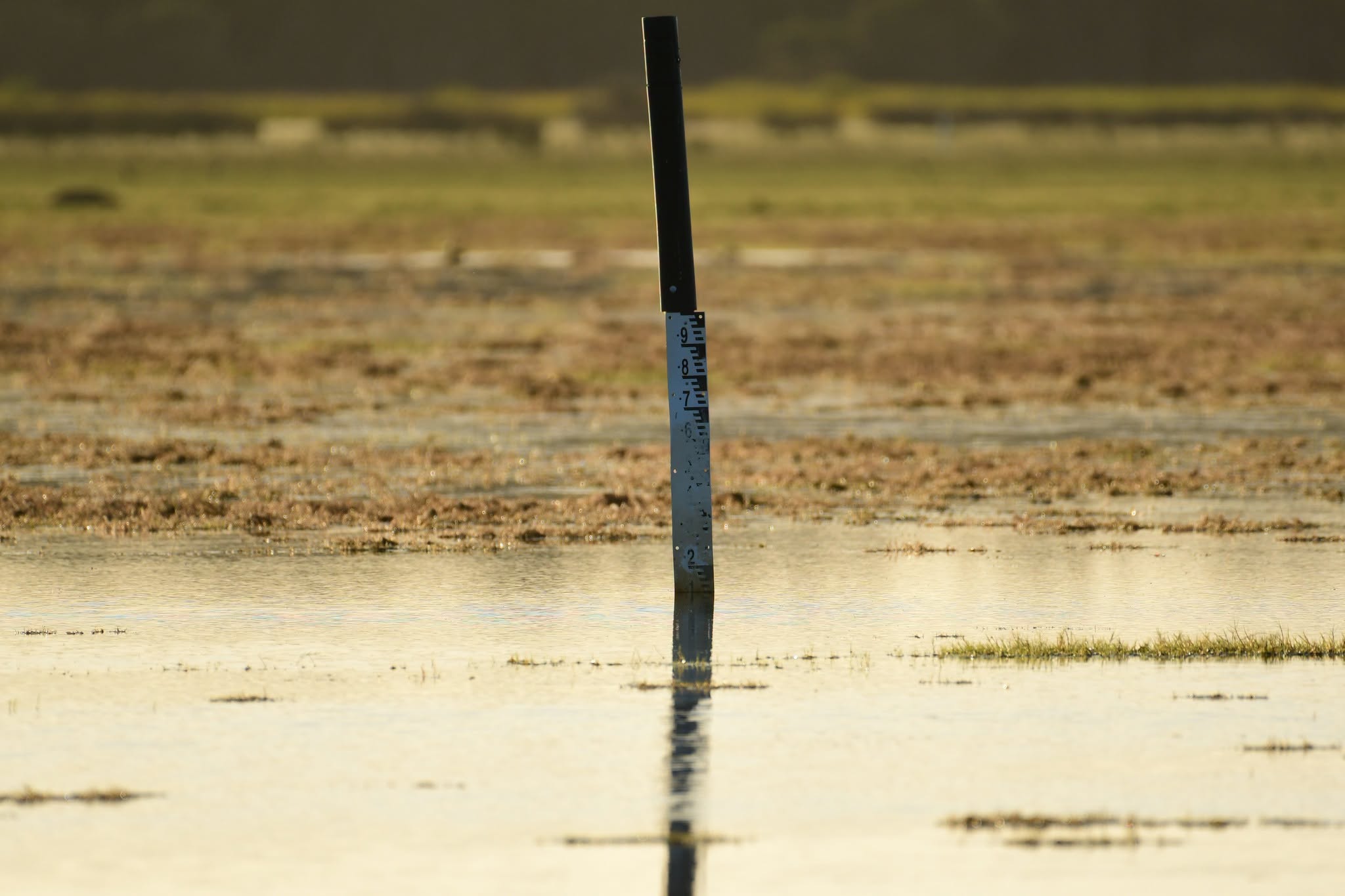
The lake is slowly drying up. PIC: Western Australian Seabird Rescue/Facebook.
 New industrial, commercial lots released at Peel Business Park
 Jessica Mauboy announced as headline act for Rockingham New Year's Eve celebrations
 Remembrance Day services in Mandurah and Rockingham
 Firefighters spend night battling blaze in Erskine and Falcon
 Mandurah included in Kate Miller-Heidke's 2027 tour
 South Yunderup woman charged over dangerous police pursuit
 Man assaulted with 'electrical device' while riding e-scooter in Mandurah
 Kwinana Police seek whereabouts of Andrew Mulder
 Golden Bay woman fronts court after allegedly lacing colleague's curry with snail pellets